Tiger Face: A Seasonal Embroidery Design Review
First Impressions: Playful, Bold, and Unexpectedly Festive
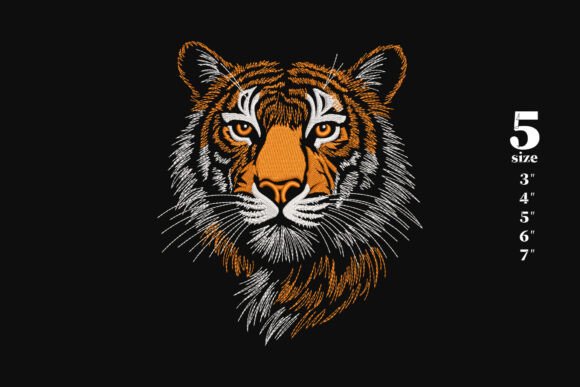
As an embroidery designer who’s built seasonal collections for over a decade, I approached Tiger Face with curiosity—not just as another wild animal motif, but as a potential holiday anchor. Right away, it delivers warmth and energy without leaning into cliché. It’s not cartoonish or overly aggressive; instead, it strikes a confident balance between expressive and refined. The facial structure is clean, the whiskers and stripes are stylized but legible, and the eyes hold gentle intensity—making it feel both spirited and approachable. For seasonal use, Tiger Face reads as playful, premium, and quietly festive. It doesn’t shout “Christmas” or “Halloween,” which is precisely why it works so well across multiple holidays—think Lunar New Year gifting, summer camp apparel, back-to-school spirit wear, or even cozy autumn home decor. Its versatility is its strongest seasonal asset.
Real-World Holiday & Seasonal Applications
In my shop planning, I immediately pictured Tiger Face on several high-performing categories:
- Sweatshirt embroidery: Centered on oversized crewnecks or cropped hoodies—ideal for family matching sets during holiday markets or Instagram reels.
- Tote bag design: Paired with minimalist typography (“Wild at Heart” or “Roar Responsibly”) for eco-conscious gift bundles.
- Kitchen towel embroidery: Stitched in warm terracotta or deep forest green thread—adds charm to farmhouse-style holiday gifting.
- Pillow cover and table linen accents: Works beautifully scaled down for subtle texture or enlarged for statement pieces.
- Embroidered patch: Perfect for iron-on or sew-on application on denim jackets, backpacks, or baby blankets—great for personalized gift upgrades.
- Ornaments and aprons: Adds character without overwhelming—especially effective when paired with natural fibers like linen or organic cotton.
For Etsy sellers and small shop owners, Tiger Face supports strong visual storytelling. Its distinct silhouette builds instant brand recognition in product mockups and printable promotional graphics—even in black-and-white social previews. Customers remember that tiger. And because it’s rooted in the Wild Animals category but executed with modern restraint, it avoids trend fatigue and feels fresh year after year.
Where to Use Tiger Face Thoughtfully
No design is universally foolproof—and Tiger Face is no exception. As a working embroidery designer, I recommend extra attention in these scenarios:
- Small hoop sizes: Avoid cramming the full face into under 4" hoops—key details (like inner stripe definition or eye highlights) may lose clarity.
- Thick or textured fabric: Heavy towels or terry cloth require higher stitch density and stronger stabilizer—test first to prevent puckering around cheek contours.
- Dark fabric + light thread: The design’s contrast relies on tone. Always test thread colors on both light and dark fabric—especially for holiday packaging where color accuracy matters.
- Stretchy garments: Sweatshirts and knits need cutaway stabilizer and possibly reduced top tension to keep stripes crisp across movement zones.
- Metallic thread: While tempting for festive shine, metallics can break on fine whisker lines—reserve them for bolder outline elements only.
- Curved surfaces: Caps or mugs (with embroidered patches) demand precise placement—use a printable mockup to verify alignment before production.
How Tiger Face Strengthens Your Seasonal Strategy
This isn’t just about aesthetics—it’s about emotional resonance and buyer trust. During holiday shopping, customers seek products that feel intentional, personal, and giftable. Tiger Face delivers that through its expressive yet balanced composition. It elevates a simple handmade gift into something memorable—a personalized gift that conveys personality, warmth, and care. For Etsy sellers, that translates directly into higher perceived value, better review language (“so unique!” / “exactly what I imagined”), and improved repeat engagement. Visually, it holds up across platforms—from thumbnail grids to printed catalogs—thanks to its strong negative space and clear focal point. And because it fits naturally within broader themes (courage, protection, playfulness), it supports cohesive brand storytelling across your entire seasonal embroidery collection.
Practical Designer Notes Before You Stitch
Before adding Tiger Face to your holiday lineup, here’s what I always verify:
- Confirm hoop size: Match the design’s native dimensions to your most-used hoops—no last-minute resizing mid-production.
- Check stitch density: High-density areas (like fur texture or stripe layering) impact run time and fabric stress—review the machine embroidery design file carefully.
- Choose stabilizer wisely: Lightweight tear-away for cotton tees; cutaway for knits or heavy linens.
- Create realistic mockups: Use actual fabric swatches—not just digital previews—to assess how thread colors interact with texture and lighting.
- Review small details post-stitch: Inspect whiskers, eye highlights, and stripe edges under natural light—some threads bloom differently after washing.
- Plan matching color palettes: Build seasonal kits—e.g., amber + charcoal for fall, coral + cream for spring, navy + gold for winter gifting.
- Verify commercial licensing: Since this is a digital embroidery file, confirm usage rights before selling finished seasonal products—especially for resale on marketplaces like Etsy or craft fairs.
When used intentionally, Tiger Face does more than decorate—it connects. It turns a kitchen towel into a conversation starter, a sweatshirt into a family heirloom-in-the-making, and a holiday bundle into something truly ownable. In a crowded market of generic motifs, it stands out—not by shouting, but by being unmistakably, warmly, and skillfully there. That’s the hallmark of a lasting holiday embroidery asset.