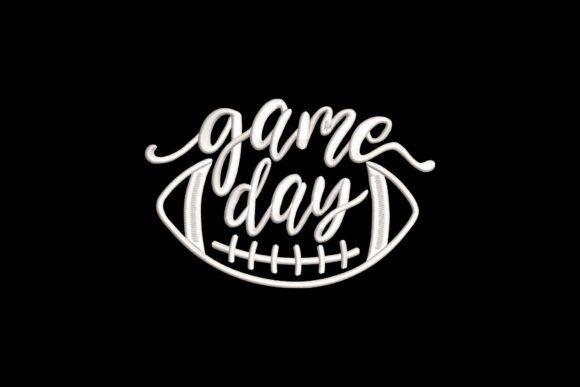
Game Day Football
A Designer’s First Impression: Charm Without Clutter
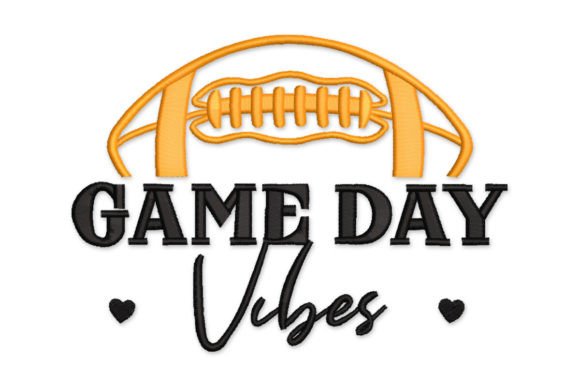
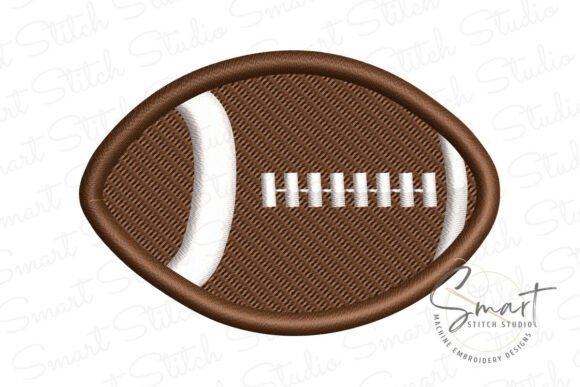
Opening the Game Day Football embroidery file, I didn’t see a loud mascot or aggressive team logo—I saw something quieter but more versatile: a clean, stylized football rendered with thoughtful negative space and balanced proportions. It’s not cartoonish, not overly technical, and definitely not generic. The shape reads instantly—no squinting required—but it doesn’t dominate. That subtlety is its strength. As an experienced designer who regularly selects machine embroidery designs for client work and small-batch production, I immediately pictured it on a soft cotton tea towel folded neatly beside a coffee maker, or stitched just above the pocket of a neutral-toned tote bag for a local sports-themed boutique.
Where It Lives Best: Real Projects, Not Just Mockups
Last week, I used Game Day Football to embroider a set of linen-blend pillow covers for a nursery refresh—yes, football in a baby room. It worked because the design leans into warmth, not rivalry. Paired with muted sage thread on oat-colored fabric, it read as playful tradition rather than sport-specific branding. That flexibility matters: this isn’t just for tailgates or fan gear. It fits equally well on:
- A lightweight apron for a family-run bakery hosting a Sunday football brunch
- A toddler’s organic cotton onesie (with gentle stabilizer and reduced stitch density)
- A holiday gift set—embroidered kitchen towel + matching oven mitt—sold via Etsy
- A small-batch embroidered patch sewn onto denim jackets for a craft fair booth
- Custom sweatshirt embroidery for a youth league fundraiser (scaled up slightly for impact)
The design’s moderate detail level means it holds up across fabric types without bleeding or filling in. No tiny lettering to vanish on terry cloth, no ultra-fine lines that collapse on stretchy knits. That makes it unusually reliable for both hobbyists and craft businesses shipping consistent handmade product.
Where to Pause—and Test First
Don’t assume Game Day Football will behave the same on every surface. On textured fabrics like waffle-weave towels or bouclé blankets, the satin stitch edges may soften slightly—still legible, but less crisp. On thin or loosely woven fabrics (think rayon challis or lightweight voile), skip the default stabilizer recommendation and go double-layer tear-away + light cut-away. And if you’re stitching it on a curved surface—like the front panel of a structured cap—test placement first. The football’s rounded silhouette can distort subtly if hooped too tightly or stitched without proper cap framing.
Dark fabric? Absolutely fine—but verify your thread colors contrast enough in natural light, not just on-screen. I once used navy thread on black twill and missed the subtle contour lines entirely until the first wash revealed slight fading. Always test in grayscale mockups, too. A design that looks balanced in color can flatten out when converted to monochrome for a minimalist brand aesthetic.
Design Notes Every Embroidery Professional Should Check
- Stitch density: Moderate—not dense enough to cause puckering on lightweight cotton, not sparse enough to look unfinished on heavier canvas. Still, check fill stitch coverage if using metallic or variegated threads.
- Hoop size: Likely fits comfortably in a 4x4 hoop, but confirm before batching. If your shop uses only 5x7 hoops, you’ll have extra real estate—great for adding a small “Est. 2024” or coordinating monogram nearby.
- Small details: The laces are implied, not outlined—smart for scaling. But zoom in: do they hold at 75% size? I tested it at 3.2" wide on a baby bib and the definition remained clear.
- Licensing: Since this falls under Hobbies Sports and Embroidery, review terms carefully before listing finished items on Etsy or bundling it into a digital embroidery file pack for sale.
- Stabilizer pairing: Works cleanly with medium-weight tear-away on stable fabrics; switch to cut-away for knits or anything that will be washed frequently (like kitchen towels or kids’ apparel).
How It Shapes Perception—Beyond the Stitch
Customers don’t buy stitches—they buy confidence, charm, and cohesion. When Game Day Football appears on a personalized gift, it signals care: not just “I added a logo,” but “I chose something warm, intentional, and quietly memorable.” For a small shop owner, that builds trust faster than flashy fonts or oversized graphics. On a boutique apron, it adds authenticity—not corporate branding, but craft-led storytelling. Even in commercial embroidery, where speed and consistency matter, this design stitches cleanly across machines and rarely needs re-hooping or tension tweaks. That saves time, reduces waste, and keeps your reputation intact when delivering 50 custom sweatshirts for a school event.
Final Thought: A Quiet Workhorse, Not a Flashy One-Off
I’ve passed on dozens of football-themed embroidery files—too busy, too dated, too dependent on perfect lighting or flawless fabric. Game Day Football avoids those traps. It’s not trying to be everything. It’s a focused, adaptable, and genuinely useful machine embroidery design. Whether you're prepping a single embroidered patch for a craft fair table or building a cohesive line of holiday embroidery for your Etsy shop, this one earns its place in your design assets—not because it shouts, but because it fits.